Andrea Jimmy Pacursa
Space Engineering MSc Graduate
ABOUT ME
Hi! My name is Andrea Jimmy, I’m 24 years old, and I recently graduated with an MSc in Space Engineering from Politecnico di Milano, with honors (110/110 cum laude), in December 2025. I’m an aspiring Space Mission Analyst with a passion for space-related projects, where I combine analytical skills and creativity to solve complex problems, particularly in trajectory analysis, mission planning, and spacecraft systems.I’m proactive and determined, approaching every challenge with dedication and focus. My studies and projects reflect my commitment to tackling problems with both technical rigor and innovative thinking.Feel free to explore some of my latest academic projects below. I’m always open to questions, ideas, and collaborations, so don’t hesitate to get in touch!
HORUS Mission: Preliminary Design
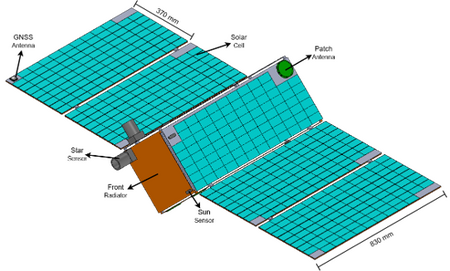
The Very Low Earth Orbit (VLEO) environment is rapidly gaining attention for Earth Observation missions due to its numerous advantages. Satellites operating at this altitude can achieve cost-effective high-resolution imaging, improved revisit time, and exploit reduced communication power and a cleaner orbital environment with less space debris. Within this framework, the High-resolution Orbiting Reconnaissance and Universal Surveillance (HORUS) mission feasibility study has been carried out, with particular attention to the Mission Analysis.
Thesis: Nonlinear sample-based guidance
The thesis aims to assess the feasibility of exploiting massive GPU-based propagations to design a fast, sample-based guidance algorithm, leveraging CUDAjectory, an ESA GPU-based propagation library enabling massive parallel computation of sample trajectories. The goal of the thesis is to formulate a non-linear correction law and to demonstrate that this is achievable without relying on linear or Gaussian assumptions about the nature of the initial uncertainty distribution. The work is conducted under the technical supervision of ESA-ESOC personnel from the Mission Analysis section. A General Purpose Guidance Software has been implemented and tested with some real case scenarios and missions.
PRELIMINARY ROCKET ENGINE DESIGN
During this one-week project, the team proposed a preliminary design of a liquid rocket engine for in-space applications using semi-cryogenic propellants (LOX-RP1). The sizing of the most important parts of the engine is performed (i.e. tanks, feeding line, injection plate, combustion chamber and nozzle) with a final feasibility study for regenerative cooling of the engine
STRUCTURAL COMPLIANCE ANALYSIS
The aim of this team project work is to assess the structural compliance of a simplified axial-symmetric spacecraft with respect to the Falcon 9 launch vehicle. Within the design loop of a space mission, the limitations imposed by the launch authority play from the beginning a key role for the structural, configuration, interface and environmental requirements definition. During further design iterations, the analysis and testing of a space structure are fundamental to qualify the final product.
SOHO mission: reverse engineering
In this project work the team performed a reverse engineering study of the main subsystems of SOHO spacecraft, including mission analysis, conceptual operations, phases and modes identification. This experience offered an excellent opportunity to enhance knowledge of Space Systems Engineering and Operations, both from a theoretical and practical perspective, while increasing familiarity with the lifecycle of a space system.
SPACECRAFT GUIDANCE
In this one-semester project, three problems were thoroughly analyzed. The first focuses on a CR3BP example, where an algorithm to compute periodic halo orbits in the cislunar region is developed by exploiting differential correction techniques and numerical continuation. The other two problems deal with impulsive and continuous guidance: for impulsive guidance, simple shooting and multiple shooting strategies are analyzed and compared, while for continuous guidance, the Optimal Control Problem (OCP) is addressed, and the Pontryagin Maximum Principle (PMP) is applied to a low-thrust scenario.
SPACECRAFT NAVIGATION
In this one-semester project, several traditional methods for Uncertainty Propagation were studied and compared, including the Linear Covariance (LinCov) method, the Unscented Transform (UT) method, and Monte Carlo (MC) simulation. Additionally, the project provided an opportunity to explore the Navigation Problem and state-of-the-art tools, such as measurement simulation, visibility window analysis, Batch and Sequential Filters, as well as long-term analyses and trade-offs for Ground Station selection.
Orbital Mechanics
During this project the team analyzed and optimized an interplanetary mission which consisted in a transfer from Saturn to an asteroid through a flyby with Jupiter.
Secondly, the team studied a planetary explorer mission for Earth observation